How to Build a Winning Real Estate Marketing Strategy That Attracts Clients

Key Takeaways
- Strategy vs. Plan: Understand that a marketing strategy is your high-level vision (the “why”), while a marketing plan is the detailed, actionable roadmap (the “how”). You need both to succeed.
- Core Strategy Components: A winning strategy is built on three pillars: defining a specific niche and client persona, setting SMART goals, and creating a strong Unique Value Proposition (UVP).
- The Three Marketing Pillars: An effective marketing plan must include 1) Real Estate SEO for local visibility, 2) Content Marketing to build authority, and 3) Email Marketing to nurture leads over time.
- Actionable 90-Day Plan: Implement a tangible 90-day plan focusing on building your foundation (Month 1), creating and distributing content (Month 2), and nurturing leads (Month 3) to see immediate progress.
Table of Contents
- The Foundation: Strategy vs. Plan
- Building Your Core Real Estate Marketing Strategy
- The Pillars of Your Actionable Real Estate Marketing Plan
- Your 90-Day Real Estate Marketing Plan Template
- Conclusion
- Frequently Asked Questions (FAQ)
The world of real estate is vast and full of opportunity. To put it in perspective, the global real estate market is projected to be worth a staggering $637.80 trillion by 2024. Even in the United States alone, the market is valued at over $47 trillion. This isn’t just a market; it’s an economic powerhouse.
For agents, this scale translates into a constant stream of potential business. In 2023, a remarkable 4,090,000 existing homes were sold. With so many transactions happening, what separates the agents who consistently close deals from those who struggle to find their next client?
The answer is a powerful and well-executed real estate marketing strategy.
This article is your complete guide to building that winning strategy. We will walk you through, step-by-step, how to create an actionable real estate marketing plan that generates a steady flow of qualified leads, builds your brand, and helps you close more deals. Let’s get started.
Section 1: The Foundation: Strategy vs. Plan

Before you spend a single dollar on ads or write one social media post, it’s crucial to understand the difference between a strategy and a plan. Many agents use these terms interchangeably, but they are fundamentally different. Getting this right is the foundation of all your future marketing success.
What is a Real Estate Marketing Strategy?
Your real estate marketing strategy is your high-level vision. It’s the “Why” and the “Who” behind your business. It’s the big-picture thinking that guides all your decisions.
Your strategy answers foundational questions like:
- Who is my ideal client? (e.g., first-time homebuyers, luxury sellers, military families)
- What makes me different from every other agent in my city? (e.g., my data-driven approach, my neighborhood expertise, my background in home construction)
- What are my primary business goals for the next one to three years? (e.g., become the top agent in a specific zip code, double my annual commission, build a small team)
Think of your strategy as the destination you’ve plugged into your GPS. It sets the direction and the ultimate goal.
What is a Real Estate Marketing Plan?
Your real estate marketing plan is the detailed, step-by-step roadmap you’ll follow to bring your strategy to life. It’s the “How,” “What,” and “When.” It turns your vision into concrete, measurable actions.
Your plan outlines the specific tactics, channels, tools, and timelines. For example:
- “I will post three videos on Instagram each week.”
- “I will publish one in-depth neighborhood guide on my blog each month.”
- “I will send a monthly market update email to my client database.”
To make this crystal clear, let’s use an analogy. Imagine you want to build the most sought-after luxury home in a prestigious suburb.
- Your strategy is the decision to build that specific type of home, for that specific type of buyer, in that specific location. It’s your vision.
- Your plan is the architectural blueprint, the construction schedule, the list of materials, and the budget for the project. It’s the detailed instructions for making the vision a reality.
You can’t have one without the other. A strategy without a plan is just a dream, and a plan without a strategy leads to scattered, ineffective actions.
Section 2: Building Your Core Real Estate Marketing Strategy
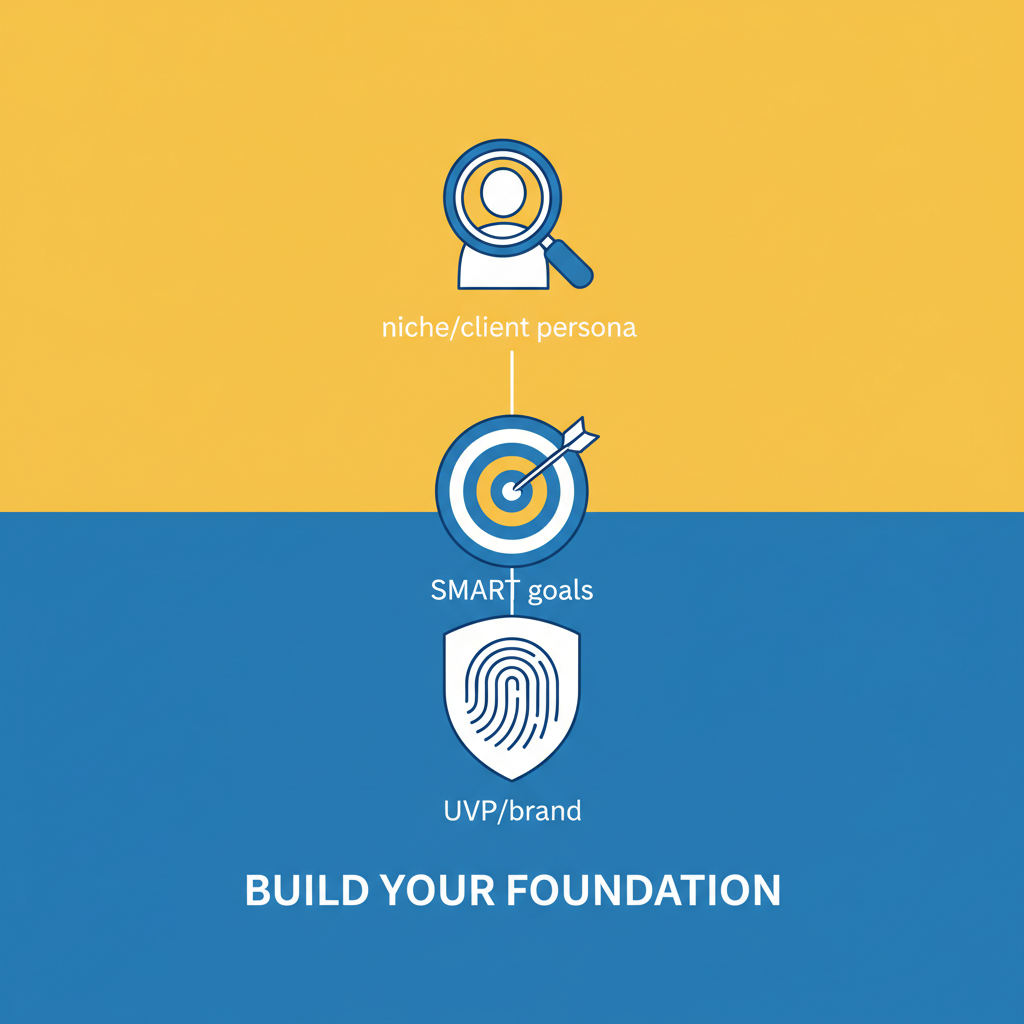
Now that you understand the difference, let’s build the “Why” and the “Who.” Your core real estate marketing strategy is built on three key decisions.
Step 1: Define Your Niche and Ideal Client Persona
In a crowded market, trying to be the agent for everyone is a recipe for serving no one well. The most successful agents are specialists. They focus on a specific niche, which makes their marketing more targeted, efficient, and memorable. When you specialize, you become the go-to expert for a particular type of client or property.
Potential Real Estate Niches:
- First-time homebuyers
- Luxury properties or condos
- Military relocations
- Downsizing seniors
- Investment or commercial properties
- Vacation homes
- Specific neighborhoods or school districts
Choosing a niche can be highly profitable. For example, focusing on a popular market segment like suburban homes can yield great results, as suburban properties priced between $300,000 and $500,000 accounted for over 60% of transactions in early 2024.
Once you’ve chosen a niche, create a detailed client persona. This is a semi-fictional representation of your ideal customer. Give them a name and get specific.
Your Client Persona Should Include:
- Demographics: Age, income, family status, occupation.
- Goals: What are they trying to achieve? (e.g., “Find a safe neighborhood with good schools for our growing family.”)
- Pain Points: What are their biggest fears or frustrations? (e.g., “I’m overwhelmed by the home-buying process,” or “I’m worried about a bidding war.”)
- Information Sources: Where do they hang out online? (e.g., Facebook groups for local parents, specific blogs, Instagram)
This persona will guide every piece of content you create and every marketing dollar you spend.
Step 2: Set SMART Goals for Measurable Success
A goal without a plan is just a wish. To create a marketing engine that truly drives your business forward, you need to set clear, measurable goals using the SMART framework.
SMART stands for:
- Specific: Clearly define what you want to achieve.
- Measurable: Use numbers and metrics to track your progress.
- Achievable: Set realistic goals based on your resources and market conditions.
- Relevant: Ensure your goal aligns with your overall business strategy.
- Time-bound: Set a specific deadline for achieving your goal.
Let’s transform a vague goal into a SMART one:
- Vague Goal: “I want to get more seller leads.”
- SMART Goal: “I will generate 15 qualified seller leads through my website in Q3 by publishing four new blog posts about the selling process and running a targeted Facebook ad campaign promoting a ‘Free Home Valuation’ landing page.”
When setting the “Achievable” part of your goals, it’s important to be realistic. Understanding industry benchmarks can help. For example, studies show that 0.4% to 2.4% of real estate leads convert into a sale. Other data suggests the average conversion rate is between 3.2% and 3.7%. This means that even a goal of generating 20-30 high-quality leads can be incredibly valuable for your business.
Step 3: Solidify Your Brand and Unique Value Proposition (UVP)
Your brand is more than your logo or headshot. It’s your reputation and the promise you make to your clients. A key part of your brand is your Unique Value Proposition (UVP).
Your UVP is the simple, clear answer to the question: “Why should a client choose me over any other agent?”
A strong UVP isn’t just a catchy slogan; it solves a specific problem for your ideal client. It communicates the unique benefit you provide.
Examples of Strong UVPs:
- “I specialize in stress-free home sales for busy professionals, handling every detail so you can focus on your career.” (Targets a pain point: lack of time)
- “My data-driven approach to pricing ensures you never overpay for your dream home or leave money on the table when you sell.” (Targets a pain point: financial anxiety)
- “As a former contractor, I help buyers spot hidden issues before they become costly problems.” (Highlights unique expertise)
Your value as an agent is immense, especially when compared to For Sale By Owner (FSBO) attempts. A key part of your UVP is your ability to generate interest and find buyers, a task that 30% of FSBO sellers cite as a top difficulty. Your professional marketing can solve this exact problem for them.
Furthermore, the value you provide is clearly recognized by sellers. In fact, nearly 9 out of 10 FSBO sellers say they would consider hiring an agent for their next sale, proving that your expertise is in high demand. Frame your UVP around solving these common challenges.
The Pillars of Your Actionable Real Estate Marketing Plan
With your strategy in place, it’s time to build your actionable real estate marketing plan. We’ll focus on three foundational pillars that will create a powerful, lead-generating system for your business.
Pillar 1: Mastering Digital Visibility with Real Estate SEO

Real estate SEO (Search Engine Optimization) is the process of making your business visible on search engines like Google when potential clients are actively looking for homes or agents. When someone types “real estate agent near me” into Google, you want to be one of the first names they see.
For real estate agents, local SEO is everything. You aren’t competing with agents across the country; you’re competing with agents in your city, neighborhood, and zip code. Here are the most important, non-negotiable actions for your local SEO success.
1. Optimize Your Google Business Profile (GBP)
This is the single most important step for local visibility. Your GBP is the information box that appears on the right side of Google search results and in Google Maps. According to experts, a core component of a successful local SEO strategy is the setup and optimization of your Google Business Profile.
- Claim and Verify Your Profile: If you haven’t already, do this immediately.
- Fill Out Every Section: Add your business name, address, phone number, website, and hours.
- Add High-Quality Photos and Videos: Include professional headshots, photos of your office, pictures of “Sold” signs, and short client testimonial videos.
- Actively Solicit Client Reviews: Reviews are a massive ranking factor. After every successful closing, send your clients a direct link to leave a review.
2. Use Local Keywords on Your Website
You need to speak the same language as your potential clients. This means using keywords on your website that they are actually typing into Google. Studies show that key local SEO strategies for real estate must include adding local keywords like “near me” and “[city_name]” to your website pages.
Focusing your efforts on terms like “real estate agent [city]” is a proven way to make your business more visible to local clients. Create pages on your website dedicated to the specific neighborhoods and towns you serve, and use these keywords naturally in the titles, headings, and text.
The ultimate goal is simple. Effective local SEO helps agents dominate neighborhood-specific searches, which attracts the most qualified buyers and sellers in their target market.
Pillar 2: Engaging Clients Through Content Marketing for Real Estate Agents

Content marketing for real estate agents is the practice of creating and sharing valuable, free content—like blog posts, videos, and social media updates—to attract, engage, and build trust with your target audience. Instead of directly pitching your services, you provide helpful information that positions you as a knowledgeable and trustworthy expert.
This isn’t a fringe tactic; it’s a mainstream strategy. A significant 54.2% of real estate marketing budgets are now dedicated to digital marketing, and content marketing is a popular choice, used by 23.1% of real estate professionals.
Why is it so popular? Because it works. One study showed that 97% of participants were successful at generating leads using content marketing.
Actionable Content Ideas:
- Website & Blog Content: Your website should be more than a digital business card. Turn it into a resource hub. A great idea is to create detailed neighborhood guide pages and an FAQ section that answers common buyer and seller questions. This not only helps your clients but also boosts your SEO.
- Video Content: Video is engaging and builds a personal connection. Create professional property tour videos, film short client testimonial videos, and record Q&A sessions answering common real estate questions to share on social media.
- Social Media Content: Be consistent. Create a simple content calendar to plan your posts. Share a mix of content, including new listings, local community events, home maintenance tips, market updates, and behind-the-scenes looks at your business.
Pillar 3: Nurturing Leads with Email Marketing

Most leads you generate won’t be ready to buy or sell a home the moment they find you. The home buying and selling journey can take months or even years. Email marketing is the perfect tool to stay top-of-mind, build relationships, and nurture those leads until they are ready to act.
The core of this pillar is the email drip sequence. A lead nurturing sequence is a series of pre-scheduled emails sent automatically to new subscribers over time. This automation is a lifesaver for busy agents, as these sequences can be set up to automatically nurture new leads, follow up with prospects, and maintain contact without you having to manually send every message.
Email Marketing Best Practices:
- Focus on Value, Not Just Selling: Your emails should be helpful. Sources agree that effective email content focuses on providing value. Share market insights, neighborhood news, home maintenance tips, and highlight your success stories or share testimonials from happy clients.
- Be Prompt and Personal: When a new lead signs up for your email list, the relationship starts immediately. It’s considered a best practice to follow up with leads promptly and personalize your communication whenever possible. Use their first name in the greeting and tailor content to their interests (buyer vs. seller).
Section 4: Your 90-Day Real Estate Marketing Plan Template
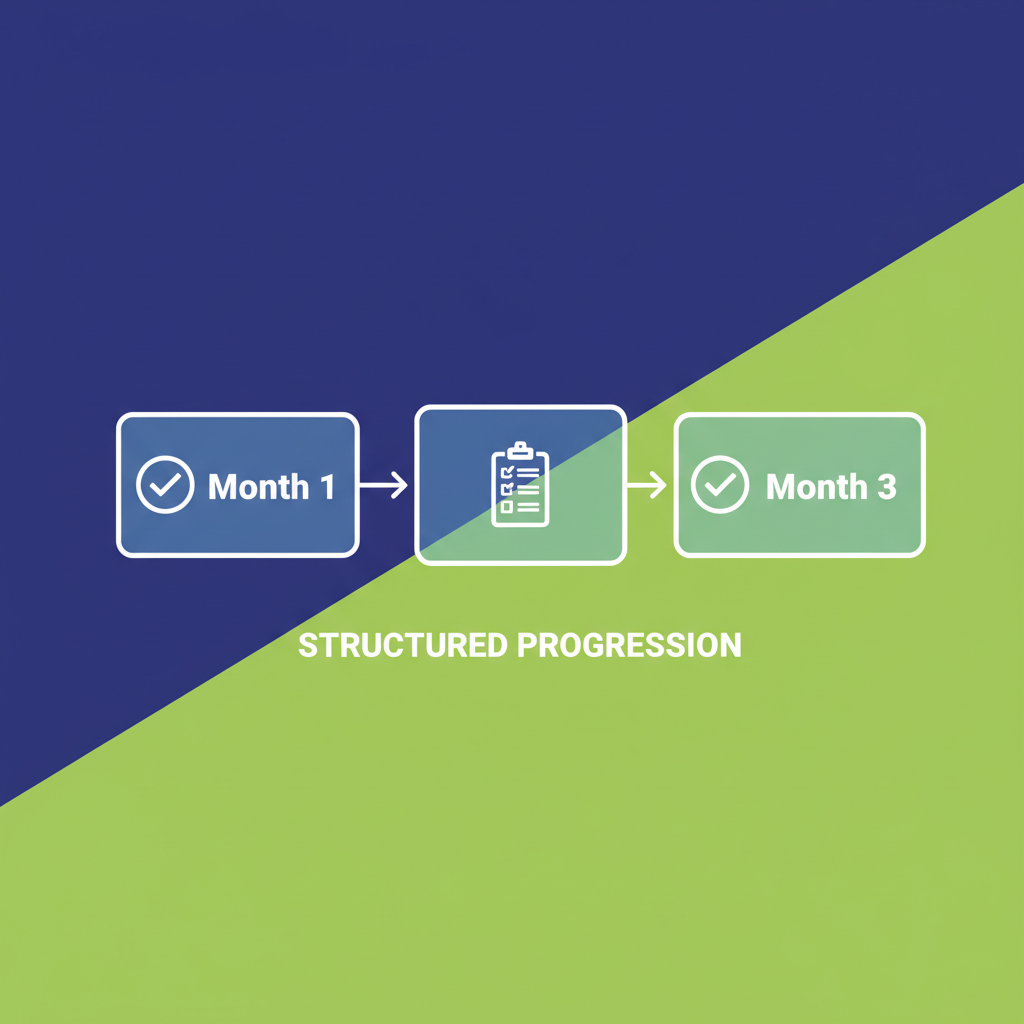
Theory is great, but execution is what matters. Here is a tangible, 90-day real estate marketing plan you can implement immediately to put all these concepts into action.
Month 1: Focus on Foundation
The first 30 days are all about setting up your marketing infrastructure for success.
- Week 1: SEO Setup. Your first priority is local visibility. Fully complete and optimize your Google Business Profile. As we’ve learned, this is a core component of a successful local SEO strategy.
- Week 2: Keyword Research. Perform local keyword research to identify the top 10-15 search terms your ideal clients are using. These will be the foundation of your content.
- Week 3: Content Foundation. Write and publish your first two high-value blog posts using your target keywords. Ideas include “A Complete Guide to Living in [Your Target Neighborhood]” or “10 Costly Mistakes to Avoid When Selling Your Home in [Your City].”
- Week 4: Email Setup. Choose an email marketing service (like Mailchimp or Constant Contact). Create a simple lead magnet, such as a downloadable “Seller’s Pre-listing Checklist,” and add a signup form to your website to start capturing email addresses.
Month 2: Focus on Content Creation & Distribution
Now that your foundation is set, it’s time to create and share content to attract your audience. This month is key for your content marketing for real estate agents.
- Week 5: Create Video Content. Film your first professional property tour video for a current listing. Reach out to a happy past client and film a short testimonial video.
- Week 6: Build Your Social Calendar. Choose one primary social media platform where your ideal client spends their time (e.g., Instagram for younger buyers, Facebook for families). Create a content calendar and schedule 3-4 posts for the upcoming week.
- Week 7: Distribute Your Content. Share your blog posts and videos across your social media channels. Post them in relevant local Facebook groups (if allowed) to expand your reach.
- Week 8: Launch Your Newsletter. Send your first monthly email newsletter to your growing contact list. Feature your new blog post, share a recent market statistic, and highlight a new listing or a recently sold property.
Month 3: Focus on Lead Nurturing & Promotion
In the final month of your 90-day sprint, you’ll focus on automating your follow-up and amplifying your best content.
- Week 9: Automate Your Welcome. Create a 3-part automated email welcome series for all new leads.
- Email 1: Introduce yourself and thank them for subscribing.
- Email 2: Provide a valuable resource (like a link to your best blog post).
- Email 3: Ask a simple question to encourage a reply (e.g., “What’s the biggest challenge you’re facing in your home search right now?”).
- Week 10: Run a Paid Ad. Identify your best-performing piece of content (e.g., the blog post that got the most traffic). Run a small, targeted Facebook or Instagram ad campaign to promote that post to a local audience that matches your ideal client persona.
- Week 11: Engage and Follow Up. Dedicate this week to actively engaging on social media. Respond to all comments and messages promptly. Follow up with anyone who has replied to your automated email series.
- Week 12: Review and Plan. Analyze your results from the past 90 days. Look at your website traffic, social media engagement, email open rates, and the number of leads generated. Use this data to determine what worked best and plan your marketing activities for the next quarter.
Conclusion
Building a successful real estate business in a competitive market doesn’t happen by accident. It requires a thoughtful approach that combines high-level vision with detailed, consistent action.
Remember the core lesson: a successful real estate marketing strategy provides the “why” and the “who,” while a detailed real estate marketing plan provides the “how” and the “when.” You need both to thrive.
By building your plan on the three essential pillars—a strong digital foundation through real estate SEO, building authority with content marketing for real estate agents, and fostering relationships with email marketing—you create a powerful system for attracting and converting clients.
The most important takeaway is that consistency beats perfection every time. Don’t get overwhelmed. Start with step one.
Stop guessing with your marketing. Use this guide to build a strategic plan and start attracting the clients you truly want to work with. Download our 90-day checklist to get started today.
Frequently Asked Questions (FAQ)
What’s the difference between a real estate marketing strategy and a plan?
A strategy is your high-level vision (the ‘why’ and ‘who’), defining your ideal client, your unique value, and your long-term goals. A plan is the detailed, step-by-step roadmap (the ‘how’ and ‘when’), outlining the specific actions, channels, and timelines you’ll use to achieve that strategic vision.
Why is local SEO so important for real estate agents?
Local SEO is crucial because your clients are searching for agents and properties within a specific geographic area. Optimizing for local search, especially your Google Business Profile and using location-based keywords, ensures you appear in front of potential buyers and sellers in your city or neighborhood at the exact moment they are looking for services.
What are the three essential pillars of a modern real estate marketing plan?
The three pillars are: 1) Mastering Digital Visibility with Real Estate SEO to be found on search engines like Google, 2) Engaging Clients Through Content Marketing (blogs, videos) to build trust and authority, and 3) Nurturing Leads with Email Marketing to stay top-of-mind with potential clients throughout their long decision-making process.