Why Your Niche Matters: A Guide to Powerful Industry Marketing Strategies
Key Takeaways
- Niche marketing, which focuses on specific market segments, is more effective and delivers a higher ROI than broad, one-size-fits-all advertising.
- Effective marketing strategies must be tailored to an industry’s unique factors, including its target audience, regulatory environment, sales cycle length, and trust requirements.
- Law firms succeed by building authority through thought leadership and meticulous reputation management.
- Real estate marketing relies heavily on high-quality visuals and a hyper-local SEO focus to attract clients in a specific geographic area.
- Tech companies must prioritize education, using content, demos, and free trials to explain complex products and demonstrate value.
- Health and wellness marketing requires a delicate balance of empathetic, patient-centric content and strict adherence to regulations like HIPAA.
Table of Contents
- The Foundation: Why Industry-Specific Marketing is Non-Negotiable
- Industry Spotlight: Tailored Strategies in Action
- The Common Thread: The Power of B2B Content Marketing
- Conclusion
- FAQ
Have you ever created a brilliant marketing campaign, poured money into it, and then watched it fall flat? It’s a common story. Many businesses use a generic, one-size-fits-all approach and then wonder why they aren’t seeing results. This isn’t just frustrating; it’s a costly and inefficient way to grow. The problem often lies in a strategy that tries to be everything to everyone.
A broad marketing strategy is defined as using a single message pushed to a large audience. It’s like shouting into a crowded room and hoping the right person hears you. The solution is to stop shouting and start having a meaningful conversation. This is where specialized industry marketing strategies come in.
In contrast to broad approaches, niche marketing plans focus on targeting smaller, well-defined market segments instead of casting a wide net. This tailored approach works because it speaks directly to the unique needs, wants, and pain points of a specific group. It’s more effective because it allows brands to connect with specific audiences in a more personal manner.
This isn’t just a theory; it’s a proven method for success. Specialized marketing consistently outperforms broad advertising by delivering personalized messaging, which improves engagement and boosts conversion rates. By concentrating your efforts, you can see a much better return on investment (ROI) compared to traditional strategies.
In this guide, we’ll explore the core reasons why your marketing must be tailored to your industry. Then, we will dive deep into actionable, powerful industry marketing strategies for four key sectors: law, real estate, tech, and health & wellness.
The Foundation: Why Industry-Specific Marketing is Non-Negotiable
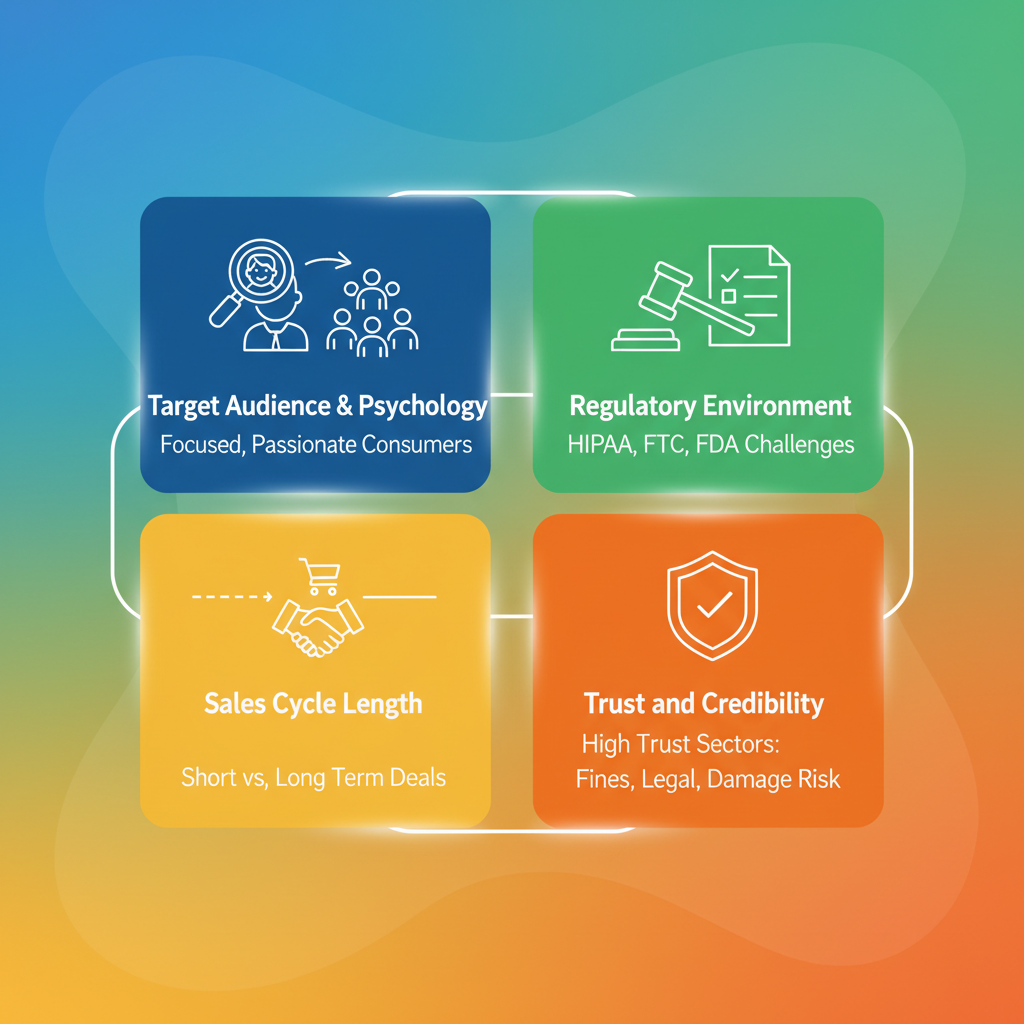
Before we get into specific tactics, it’s crucial to understand why different industries demand different marketing playbooks. Applying a tech marketing strategy to a law firm is like trying to fit a square peg in a round hole. The core principles of your business environment dictate your approach. Here are the four foundational pillars that make industry-specific marketing a necessity.
1. Target Audience & Psychology
Every industry serves a unique audience with a distinct mindset. A person looking for a wellness app (B2C) is driven by personal goals, emotions, and immediate benefits. Their decision-making process is often quick and personal.
A business executive looking for a new software solution (B2B) is driven by logic, efficiency, and return on investment. They need to justify the purchase to a team, consider integration with existing systems, and think about long-term value. A smaller niche often contains more focused and passionate consumers, while a larger market just offers more people. Understanding this psychological difference is the first step in creating a message that resonates.
2. The Regulatory Environment
Some industries operate in a marketing free-for-all, while others are bound by strict rules and regulations. This factor alone can completely change your marketing strategy. You cannot market a medical practice the same way you market a new restaurant.
Healthcare is a perfect example. The healthcare industry faces a complex regulatory landscape, with major challenges including HIPAA compliance and rules from the FDA. Making unsubstantiated claims or mishandling patient data isn’t just bad marketing—it’s illegal. Legal and financial industries also face heavy oversight. Your marketing must be built on a foundation of compliance to avoid severe penalties.
3. Sales Cycle Length
The time it takes for a potential customer to become a paying client is known as the sales cycle. This varies dramatically between industries and dictates your marketing tactics.
- Short Sales Cycle: Think of an impulse purchase, like a new snack or a streaming subscription. Marketing for these products focuses on creating immediate desire, showcasing social proof (reviews), and making the purchase process as frictionless as possible.
- Long Sales Cycle: Consider the process of choosing a corporate law firm or buying enterprise software. This decision can take months, involving multiple decision-makers, demos, and contract negotiations. Marketing here must focus on lead nurturing—building a relationship over time with educational content, case studies, webinars, and consistent follow-up.
4. Trust and Credibility Requirements
How much trust does a customer need to have in you before they buy? For a company selling t-shirts, the risk is low. If the customer doesn’t like the shirt, they’re out a few dollars. But for a surgeon, a financial advisor, or a real estate agent handling a life-changing transaction, the level of trust required is immense.
In these high-trust industries, marketing isn’t about flashy ads; it’s about building authority and credibility. This means prioritizing testimonials, professional credentials, case studies, and transparent communication. In highly regulated sectors like healthcare, the stakes are even higher. Failing to comply with regulations can lead to massive fines, legal action, and a complete loss of public trust.
Industry Spotlight: Tailored Strategies in Action
Understanding the “why” is important, but seeing it in action is where the real learning happens. Let’s break down the unique challenges and winning strategies for four distinct industries.
Building Trust & Authority: A Deep Dive into Law Firm Marketing
The biggest challenge in law firm marketing is selling an intangible product: expertise. You can’t show a picture of a successful legal argument the way you can a new car. Potential clients are often skeptical, and the decision to hire a lawyer is a high-stakes one. On top of that, strict bar association rules limit how firms can advertise and approach clients.
The key is to shift the focus from “selling” to “educating and advising.” This is a perfect use case for strategic b2b content marketing.
Key Strategies for Law Firms:
- Become a Thought Leader: Don’t just say you’re an expert; prove it. Publish in-depth blog posts that analyze recent court cases, write white papers on new legislation affecting your target clients, or host webinars that explain complex legal topics in simple terms. This builds credibility and attracts high-quality leads.
- Manage Your Reputation Meticulously: In the legal world, reputation is everything. Actively monitor and respond to online reviews. Where ethically allowed, showcase powerful client testimonials. Develop detailed case studies that highlight your process and successful outcomes (while protecting client confidentiality) to show potential clients what you can do.
- Network with Purpose: Your next big client is likely in another professional’s network. Be active on platforms like LinkedIn, sharing valuable insights and connecting with leaders in the industries you serve. Participating in legal panels, speaking at industry conferences, and joining professional organizations are essential for building referral networks.
- Specialize and Dominate a Niche: Instead of being a “general practice” firm, market a specific strength. Are you the go-to firm for intellectual property law for tech startups? Or do you specialize in real estate law for commercial developers? A narrow focus makes your marketing more targeted and your expertise more believable.
Visuals & Hyper-Local Focus: Winning at Marketing for Real Estate
The primary challenge in marketing for real estate is standing out in a very crowded and geographically limited market. Every agent is competing for the same listings and buyers in a specific area. Furthermore, a home is both a visual and deeply emotional purchase. Trust needs to be established quickly with clients who are about to make one of the largest financial decisions of their lives.
Key Strategies for Real Estate:
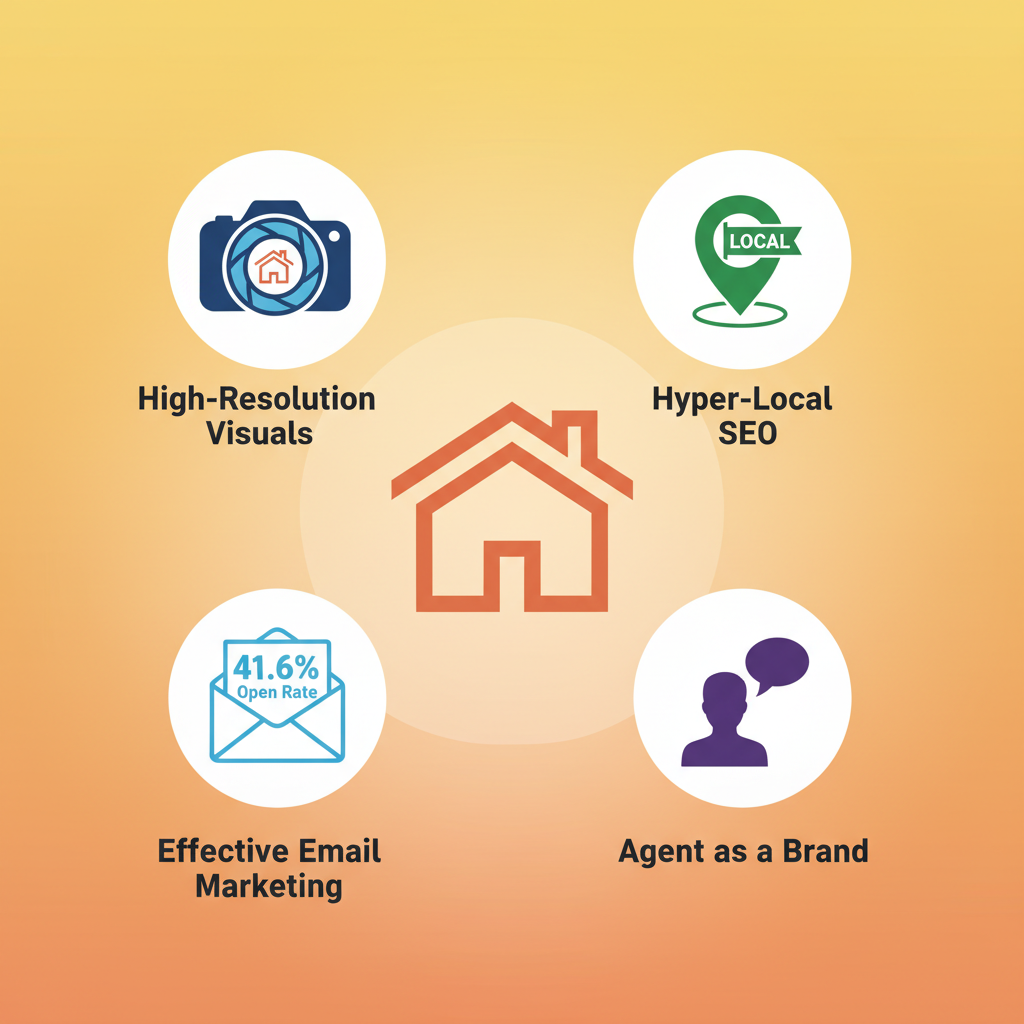
- Tell a Visual Story: In real estate, a picture is truly worth a thousand words—and a video is worth a million. Invest in professional, high-resolution photography, 3D virtual tours, and drone footage that showcases the property and its surroundings. Use visually-driven platforms like Instagram, Pinterest, and Facebook to create a compelling narrative around each listing.
- Master Hyper-Local SEO: Your clients aren’t searching for “houses for sale”; they’re searching for “three-bedroom homes in downtown Austin” or “best school districts in Fairfax County.” Your entire digital presence should be optimized for these local search terms. Create blog content about neighborhood amenities, local market trends, community events, and school ratings to establish yourself as the local expert.
- Nurture Leads with Email: Not everyone is ready to buy today. Use email marketing to stay top-of-mind. Create targeted campaigns that send new listings to buyers with specific criteria, share monthly market analysis, or offer tips for homeowners. This channel is highly effective; a recent report showed the average email open rate in the real estate industry is an impressive 41.6%.
- Build the Agent’s Brand: People hire people, not just brokerages. Agents should focus on building their personal brand. Position yourself as the friendly, knowledgeable local guide. Be active in community Facebook groups, sponsor local events, and use social media to share your personality and expertise. This human connection builds the trust needed to close a deal.
Education & Innovation: Dominating Tech Company Marketing
The central hurdle for tech company marketing, especially for B2B Software-as-a-Service (SaaS) products, is education. You may have an innovative solution, but if your audience doesn’t understand the problem it solves or how it works, they won’t buy it. The sales cycle is often long, requiring approval from multiple departments (IT, finance, leadership), and the competitive landscape changes constantly.
Effective marketing in this space is less about advertising and more about demonstrating value through b2b content marketing. The primary objective is clear: the goal is to turn content into a qualified pipeline of potential customers, not just generate clicks.
Key Strategies for Tech Companies:
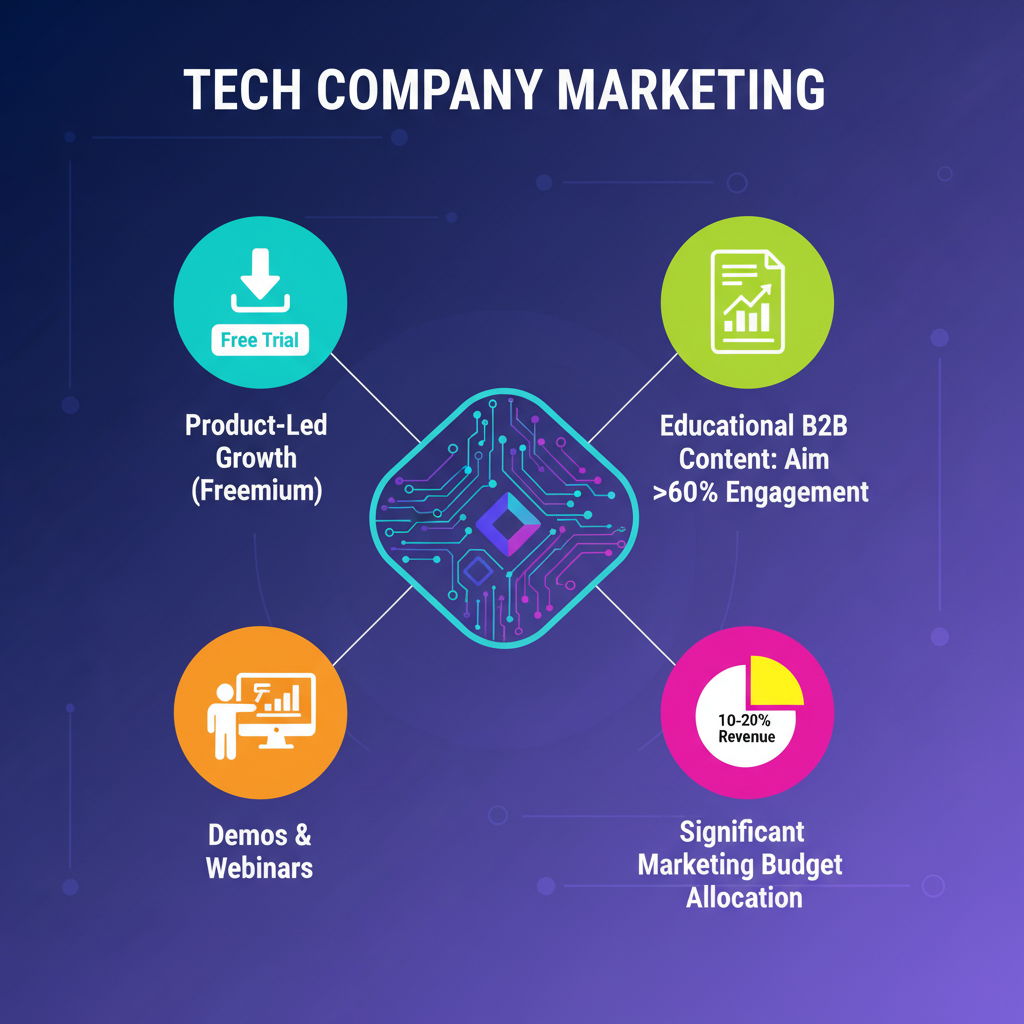
- Let the Product Do the Talking: Use a Product-Led Growth (PLG) model. Offer a freemium version of your software or a no-obligation free trial. This removes the barrier to entry and allows users to experience the value of your product firsthand. A positive user experience is your most powerful marketing tool.
- Invest in Educational Content: Your content should be a resource that helps your target audience do their job better. Create comprehensive guides, ROI calculators to prove financial value, and detailed competitor comparison pages. High-value content establishes you as an authority and nurtures leads through the long sales cycle. For this content to work, you should aim for engagement rates that exceed 60% for pieces targeting specific user pain points.
- Focus on Demos and Webinars: Complex software is hard to understand through text alone. Use live demos and on-demand webinars to walk potential customers through features, showcase real-world use cases, and answer their questions in real time. This is a critical step in moving a lead from “interested” to “ready to buy.”
- Budget Accordingly: Marketing in the tech space is not cheap, but it’s a necessary investment for growth. It’s standard for the average B2B SaaS company to allocate 10–20% of its annual revenue to its marketing budget.
Empathy & Compliance: Mastering Health and Wellness Marketing
The greatest challenge in health and wellness marketing is balancing empathy with an extremely strict regulatory environment. You are speaking to people about their health—a vulnerable and personal topic—while navigating a minefield of rules.
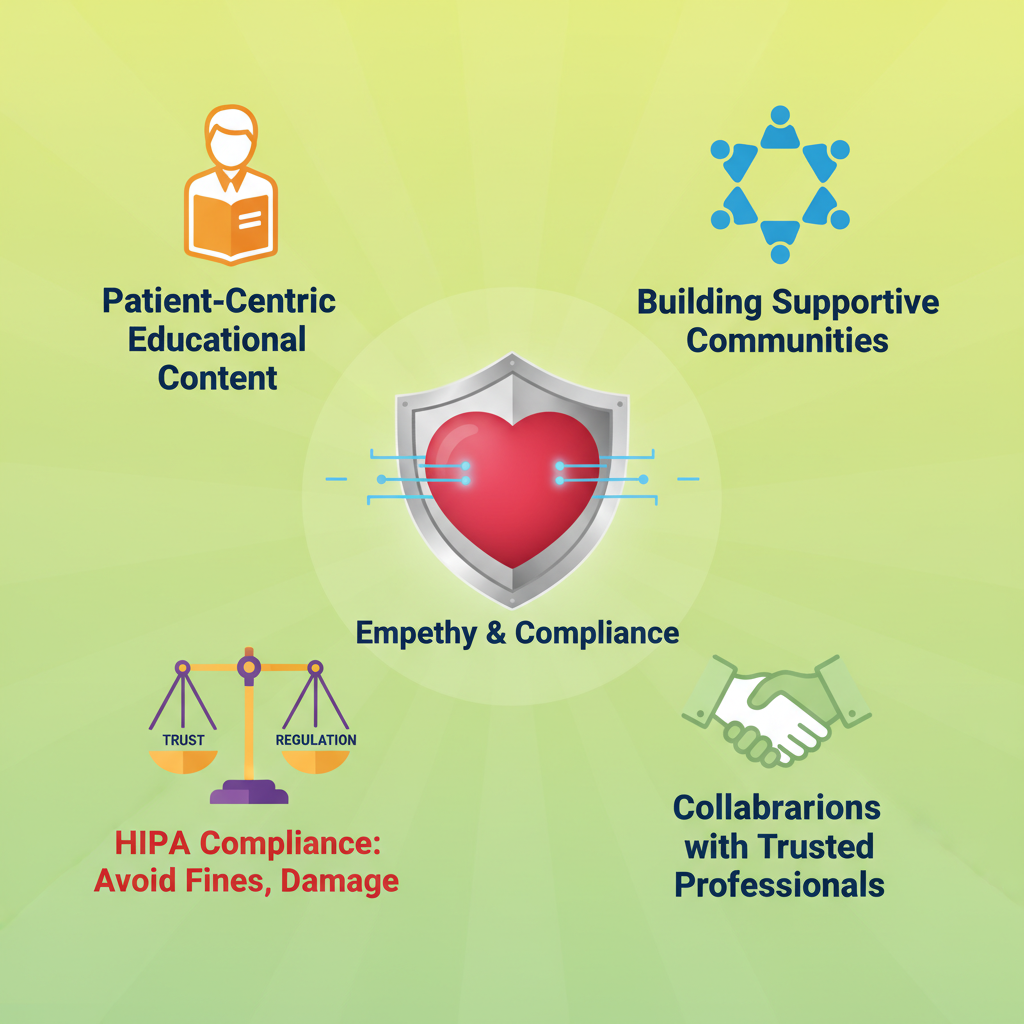
It is notoriously difficult to navigate due to strict regulations like HIPAA. One of the key regulatory challenges is HIPAA compliance itself, which governs patient privacy. This creates a constant tension, as marketers must find a way to balance patient engagement with these strict privacy requirements. The consequences of getting it wrong are severe; ignoring compliance can expose a brand to significant risks, including huge fines and irreversible damage to its reputation.
Key Strategies for Health and Wellness:
- Create Patient-Centric Content: Your content should empower, educate, and support your audience. Write articles that help people manage a condition, create videos with gentle exercises, or share healthy, dietician-approved recipes. The goal is to be a trusted resource, not just a service provider.
- Build a Safe Community: People dealing with health challenges often seek connection with others in similar situations. Foster a supportive community through a private Facebook group, a moderated forum on your website, or patient support events. This builds deep loyalty and trust.
- Share Success Stories with Consent: Testimonials are incredibly powerful in this sector, but they must be handled with care. Share anonymized patient stories or, with explicit written consent, feature testimonials that focus on the positive human outcome and improved quality of life.
- Partner with Trusted Professionals: Build credibility by association. Collaborate with respected doctors, registered dietitians, certified trainers, or wellness influencers who align with your brand’s values. Their endorsement can provide the validation potential clients are looking for.
The Common Thread: The Power of B2B Content Marketing Across Industries
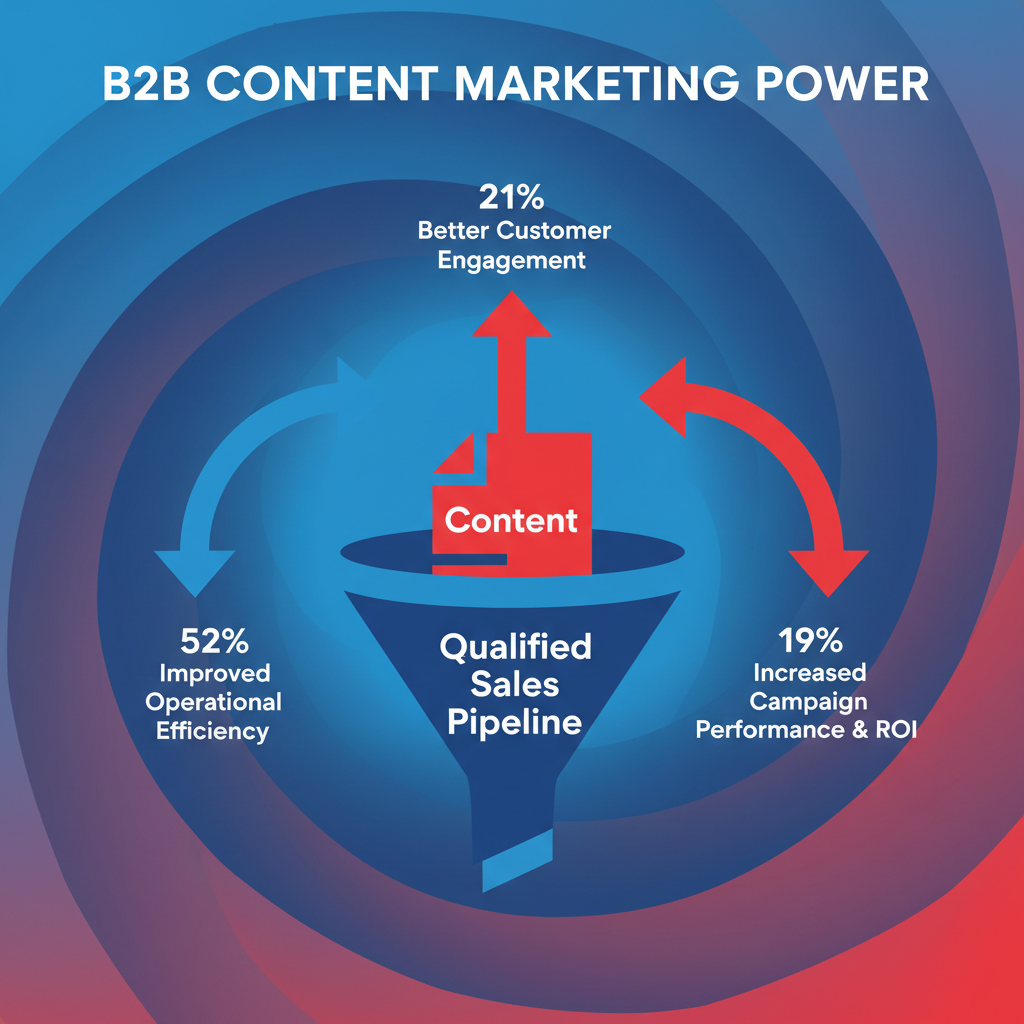
While we’ve highlighted the differences between sectors, there’s a powerful strategy that connects many of them: b2b content marketing. This is especially true for any industry with a long sales cycle, a complex product, or a high need for trust, such as law and tech. Its core purpose is fundamentally different from consumer advertising. As one source puts it, the goal of B2B content marketing is to turn content into a qualified sales pipeline, not simply to generate website traffic.
This strategy is highly adaptable.
- For law firm marketing, it takes the form of authoritative articles and white papers that demonstrate legal expertise.
- For tech company marketing, it manifests as detailed case studies and ROI calculators that build a business case for a software solution.
The tactic—creating and distributing valuable, non-promotional content—is the same. But the substance is meticulously tailored to the industry’s audience and their specific questions. The best part is that its effectiveness is measurable. Businesses can use content marketing benchmarks to track performance, from audience engagement to lead generation.
The benefits are clear and significant. According to a Content Marketing Institute report, businesses that successfully implement B2B content marketing see improved operational efficiency (52%), better customer engagement (21%), and increased campaign ROI (19%). It’s a versatile tool for building trust and driving growth in complex industries.
Conclusion
If there is one thing to take away, it’s this: generic marketing doesn’t work. The most powerful industry marketing strategies are born from a deep and specific understanding of a niche—its audience, its challenges, and its unique buying behavior. Trying to be everything to everyone makes you nothing to anyone.
We’ve seen how wildly different these approaches can be. Law firms must build their marketing on a foundation of authority and trust. Real estate thrives on stunning visuals and hyper-local expertise. Tech companies succeed by educating their market and proving their value. And the health and wellness sector must master the delicate balance of empathy and strict compliance.
By tailoring your message, tactics, and channels to the specific realities of your industry, you stop wasting resources and start building real connections that drive sustainable growth.
Ready to move beyond generic advertising? Contact our experts to build a marketing strategy that’s perfectly tailored to your industry.
FAQ
Why is niche marketing better than broad marketing?
Niche marketing is more effective because it targets a smaller, well-defined audience with a personalized message that speaks directly to their specific needs and pain points. This leads to higher engagement, better conversion rates, and a stronger return on investment compared to broad marketing, which uses a generic message for a large, undefined audience.
What is B2B content marketing?
B2B (business-to-business) content marketing is a strategy focused on creating and distributing valuable, relevant, and non-promotional content to attract and retain a clearly defined business audience. Its primary goal is to educate potential customers, build trust and authority, and ultimately generate a qualified sales pipeline for complex products or services, like those in the legal and tech industries.
Why is HIPAA compliance so important in health and wellness marketing?
HIPAA (Health Insurance Portability and Accountability Act) compliance is critical because it protects sensitive patient health information. In marketing, this means any communication or content cannot reveal protected health data without explicit consent. Failing to comply can result in massive fines, legal action, and a complete loss of trust, which is devastating for any healthcare or wellness brand.
What is a “long sales cycle” and how does it affect marketing?
A long sales cycle is the extended period it takes for a potential customer to make a purchase decision. This is common in industries like B2B tech or law, where decisions are complex, expensive, and involve multiple stakeholders. Marketing for a long sales cycle must focus on lead nurturing—building a relationship over time through educational content, demos, webinars, and case studies to maintain engagement and guide the prospect toward a decision.